Organize around client intent
Service structure follows the questions prospective clients are likely to ask rather than internal company terminology.
A service website designed in the browser as much as in the design file.
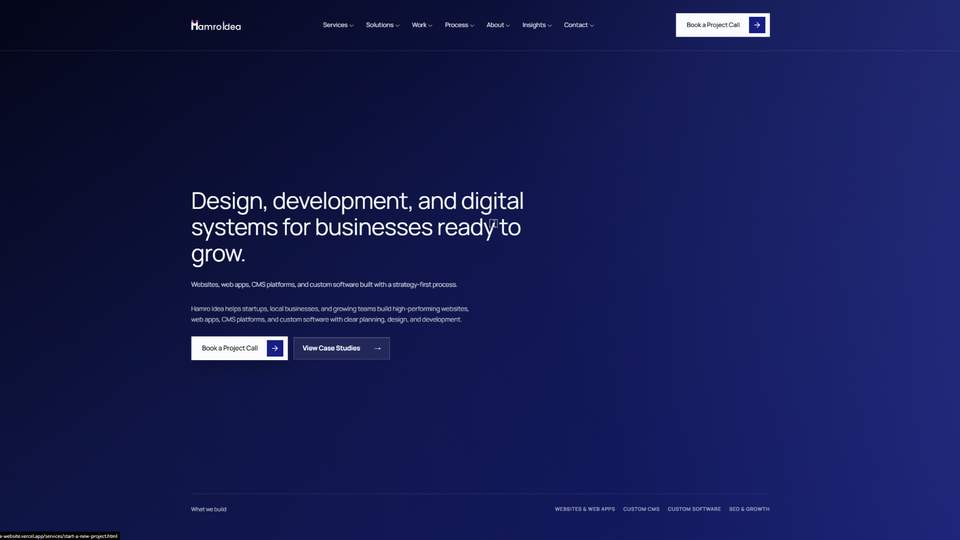
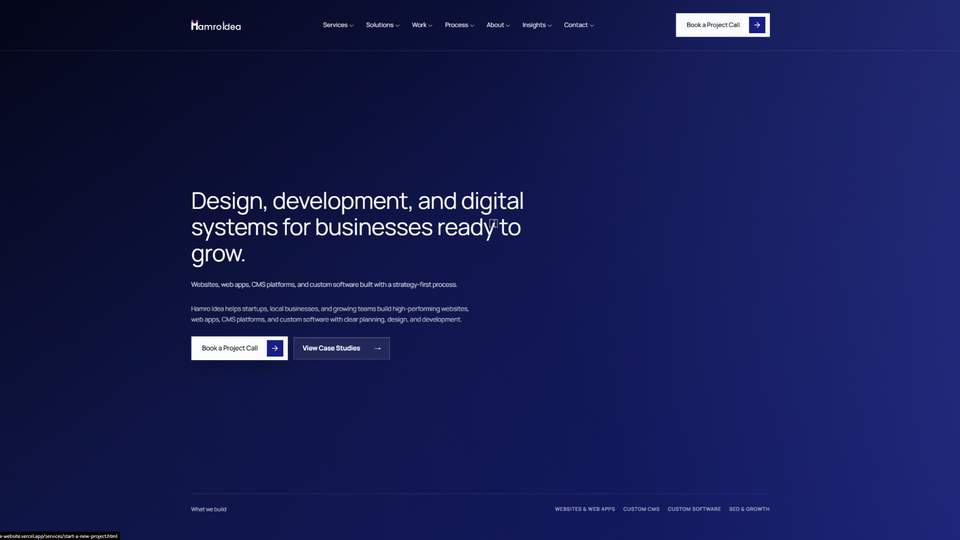
Prospective clients need to know what the studio does, whether the work is relevant and where to go next. The redesign therefore began with positioning and information architecture rather than a visual refresh. It also had to survive real content, responsive constraints and future service pages.
My contribution. I worked across positioning, information architecture, visual design, responsive UI, reusable sections, conversion paths, semantic markup and front-end implementation.
Service structure follows the questions prospective clients are likely to ask rather than internal company terminology.
Real content lengths, breakpoints and implementation constraints become feedback during design instead of after handoff.
Heading structure, accessible markup and search readability are considered during composition, not as post-launch cleanup.
The finished system is easier to extend because the content structure, responsive behavior and front-end patterns were designed together. The case is also a useful example of my preference for staying close to implementation.
Positioning establishes relevance.
Service architecture helps visitors find the right capability.
Project proof gives the offer credibility.
Contextual calls to action turn evaluation into conversation.
The finished system is easier to extend because the content structure, responsive behavior and front-end patterns were designed together. The case is also a useful example of my preference for staying close to implementation.