← Back to Work
Web3 / Wallet Mobile App 2024

Yarsha Web3 App

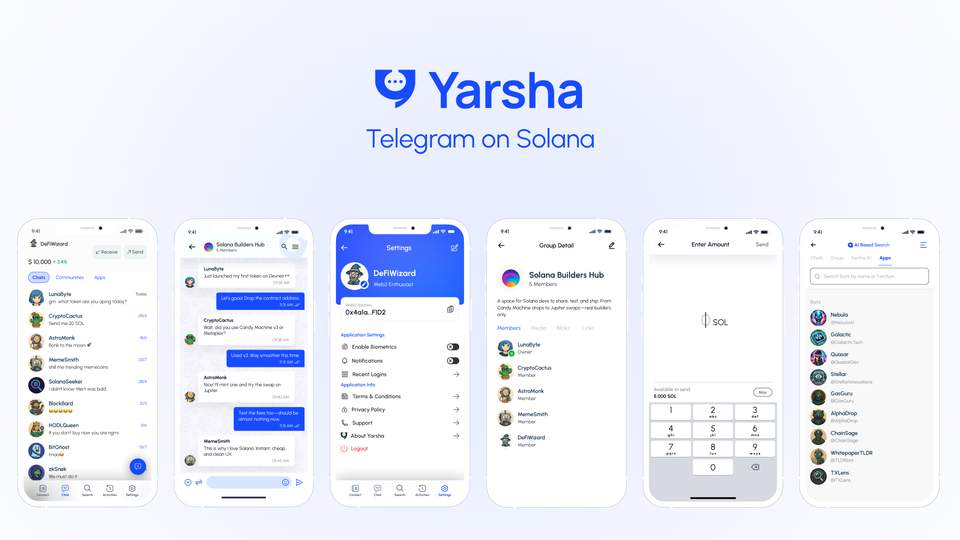
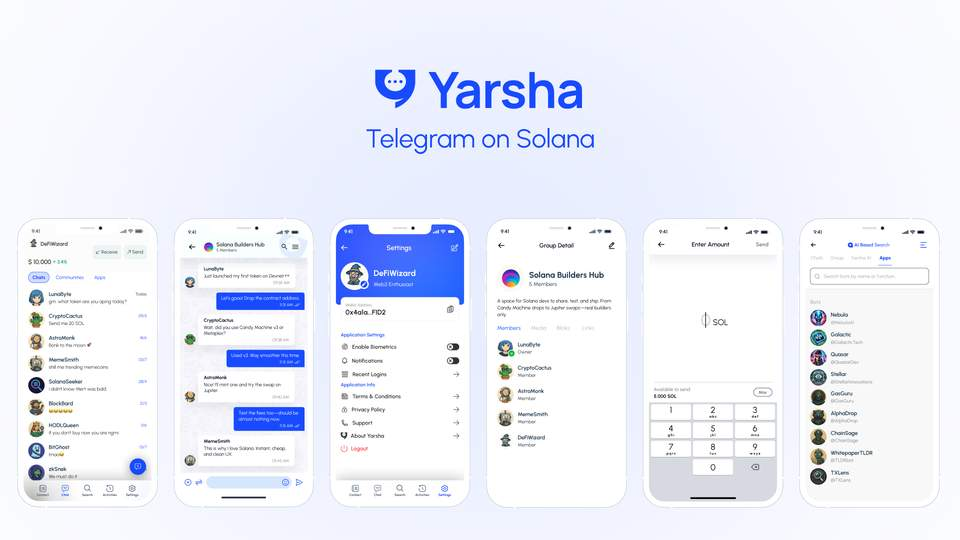
Yarsha is a mobile Web3 app that combines messaging with crypto transfers. The project focused on onboarding, trust language, and transaction review so users always knew what they were signing.

Concept image representing Yarsha wallet onboarding and transfers
Role

Lead Product Designer
UX, UI, Prototyping

Team

2 Engineers, 1 PM

Timeline

Feb 2024 - Jun 2024 (5 Months)

Outcome

Mobile onboarding with clearer transfer review

THE PROBLEM

Mobile Web3 felt confusing and risky for first-time users.

People struggled with wallet setup, key safety, and transaction details. Without clear language and guardrails, trust eroded before the first successful transfer.

"If the signing screen is the only explanation, we have already lost them."

Goals & Success Metrics

Goal
Frictionless Onboarding

Shorten the path from install to first safe transaction.

Goal
Trust Language

Explain fees, network actions, and outcomes in plain language.

Goal
Daily Utility

Make routine actions feel as fast as messaging apps.

KEY DECISIONS

Turning points in the mobile experience

Research

Benchmark trust, not just flows

Competitor benchmarking and user interviews showed that confusion was less about feature count and more about hidden consequences during wallet setup and transfer review.

Flow design

Use progressive disclosure

Users learned about wallet safety and seed phrases before creation, so the signing screen became confirmation rather than first-time discovery.

Scope

Keep mobile focused on daily utility

Bot creation stayed web-only. That constraint simplified the mobile product and kept onboarding, messaging, and transfers easier to understand.

FIGMA PROTOTYPE

High-fidelity mobile flows

The prototype maps onboarding, wallet creation, and transaction review into a single, consistent language. Each screen focuses on clarity, risk explanation, and the exact next step.

DESIGN SYSTEM

Mobile-first trust pattern library

Key Components

A focused set of trust patterns mapped directly to wallet states, network status, and transfer confidence.

  • Signing stepper with risk tiers
  • Balance cards with action hierarchy
  • Status chips for pending, failed, and confirmed
Review: Network fee, recipient, and final amount
BEFORE / AFTER

What the redesign changed for users

Before

Trust broke before the first transfer

Users encountered wallet creation, fees, and transaction states without enough explanation, which made the whole experience feel risky and unfamiliar.

After

Signing became confirmation, not discovery

Progressive disclosure, review structures, and clearer status states made fees, recipient details, and expected outcomes visible earlier in the flow.

IMPACT & NEXT STEPS

How success would be measured

Activation

Onboarding completion

Measure how many users go from install to first successful wallet setup without support intervention.

Transactions

Successful transfers

Track completion rate for send and receive flows, especially the drop-off between review and confirmation.

Support load

Confusion-related queries

Monitor support questions tied to wallet setup, seed phrase handling, and fee comprehension.

Retention

Repeat transaction behavior

Use repeat transfers and daily active usage as signs that the product feels safe enough for routine behavior.

Next steps: expand the component library for history filters and multi-chain scenarios, test microcopy variations, and explore notifications for network events.

Other cases

Static SEO context

What this Web3 mobile app UX case study focuses on

Focus

Yarsha Web3 App

Mobile Web3 messaging, wallet interaction, blinks, transfers, and transaction review clarity.

Role

Truthful contribution

Product design for Web3 mobile flows, with emphasis on understandable wallet actions and trust-focused microcopy.

SEO note

Subject-specific framing

This section is rendered at build time so search engines and AI crawlers can read the page context without relying only on client-side JavaScript.

Frequently asked questions

Questions this page answers

What is Yarsha?

Yarsha is a mobile-first Web3 messaging experience that combines chat, blinks, wallet interaction, and transfer review.

What was Nischhal’s role in Yarsha?

Nischhal designed Web3 mobile app flows focused on messaging, wallet actions, transfers, transaction review, and trust-focused microcopy.

What UX problem did Yarsha focus on?

The design focused on making wallet and transfer actions easier to understand before users commit to sensitive Web3 actions.

Why is Yarsha relevant to Web3 UX?

Yarsha connects messaging, wallet actions, transaction review, and status feedback in a mobile interface where trust and clarity are important.

Download Resume