Share conventions, not priorities
Creators and learners can reuse familiar components while still seeing information ordered around their different jobs.
One LMS, different mental models for the people building a course and the people trying to learn from it.
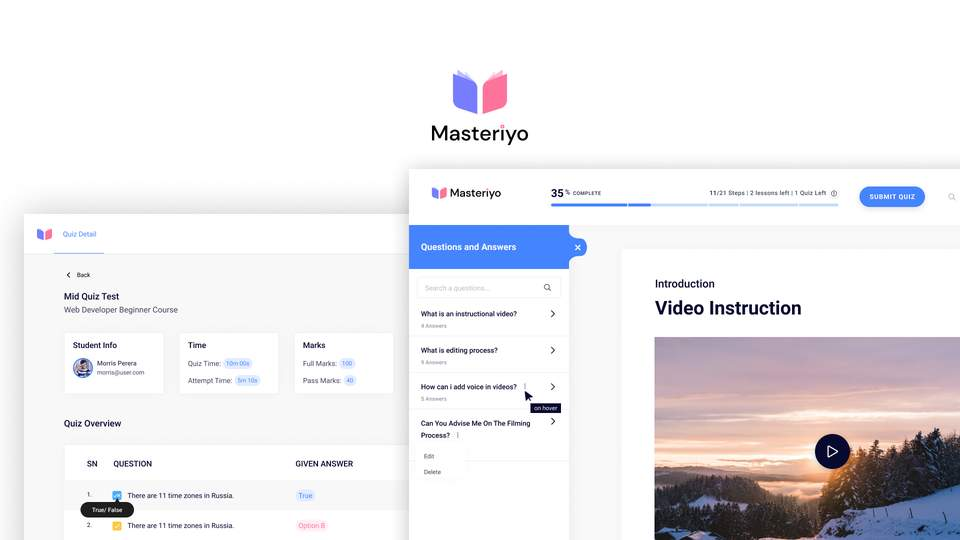
Course creators think in curriculum, settings, publishing and repeatability. Learners think in progress, comprehension, feedback and what comes next. Administrators need oversight. The product needed reusable conventions without letting the underlying content model dictate the interface for every role.
My contribution. I contributed within a larger product team, working on course and quiz flows, learner states, hierarchy and reusable interface patterns. The work had to fit an established WordPress LMS, existing conventions and a collaborative design process.
Creators and learners can reuse familiar components while still seeing information ordered around their different jobs.
Course and quiz setup is broken into meaningful decisions instead of exposing every configuration option at once.
Progress, attempt state and completion are presented in the context of what the learner should do next.
The artifacts sit inside the story because proof is more useful next to the decision it supports than in a ceremonial section at the end.
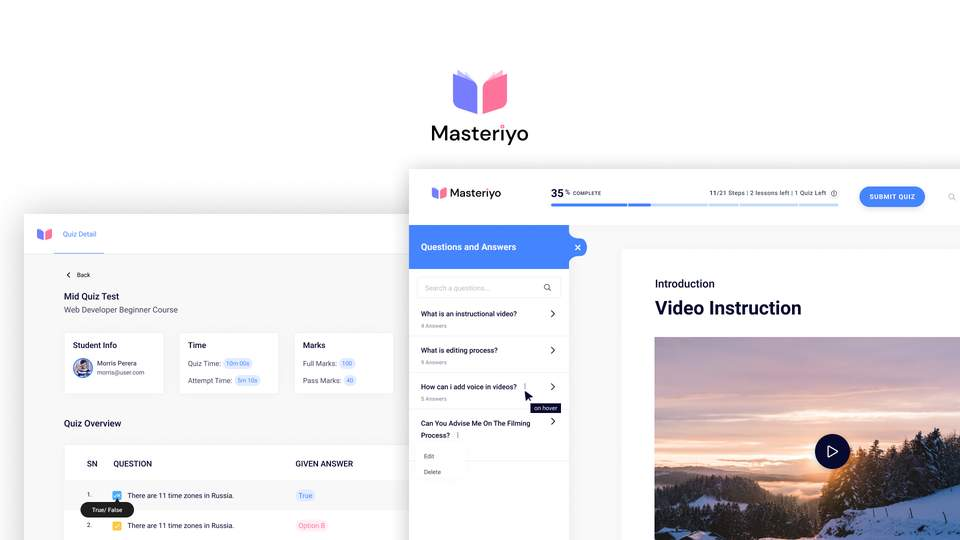
The work demonstrates how to add features inside a mature product and a multi-designer team: respect established patterns, make contribution boundaries clear and document enough behavior for another person to continue the work.
Creators move from structure into progressive configuration.
Learners move from content into feedback and continuation.
Shared components reduce relearning without forcing equal density.
Empty, error and completion states stay inside the same product language.
The work demonstrates how to add features inside a mature product and a multi-designer team: respect established patterns, make contribution boundaries clear and document enough behavior for another person to continue the work.