Share one lifecycle
The product uses consistent delivery states underneath role-specific interfaces.
Three interfaces looking at the same delivery, each needing a different answer from the same underlying state.
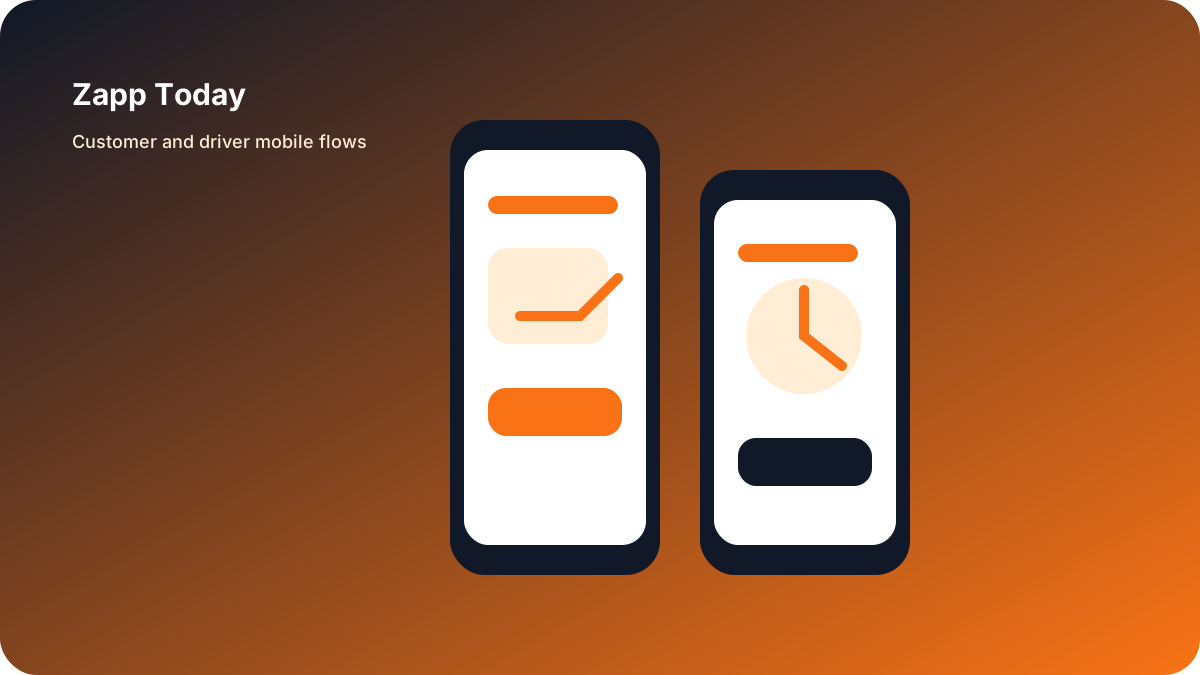
Customers want confidence, drivers need the next operational task and support teams need enough history to recover when something goes wrong. All three roles depend on one delivery lifecycle, but showing them the same information would make every experience worse.
My contribution. My work focused on booking context, driver tasks, tracking, delivery status, state transitions and exception handling across customer, driver and operational views.
The product uses consistent delivery states underneath role-specific interfaces.
Active-work screens reduce secondary information and prioritize the action needed now.
Delay, reassignment, interruption and failure receive defined states and recovery paths.
The artifacts sit inside the story because proof is more useful next to the decision it supports than in a ceremonial section at the end.

The design separates information priority by role without allowing status language to drift between them. That gives the product a stronger foundation for tracking, support and exception handling.
Booking creates the shared delivery context.
Driver views translate state into immediate tasks.
Customer tracking translates state into useful confidence.
Operations preserve history and exception detail for recovery.
The design separates information priority by role without allowing status language to drift between them. That gives the product a stronger foundation for tracking, support and exception handling.