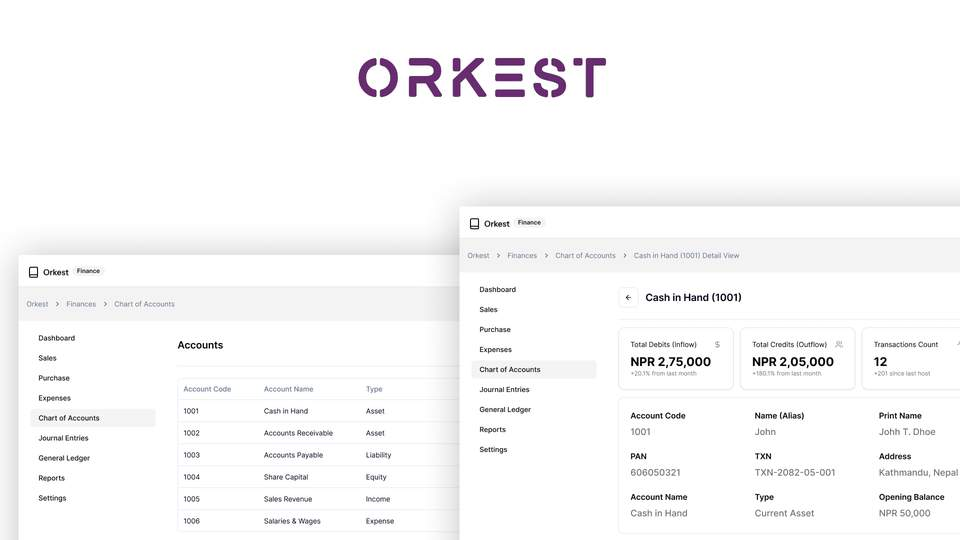
Shared product grammar
CRM, Sales, Inventory, Finance, and workspace areas use common structural rules without pretending their workflows are identical.
A SaaS architecture problem solved from shared rules outward, not screen by screen.
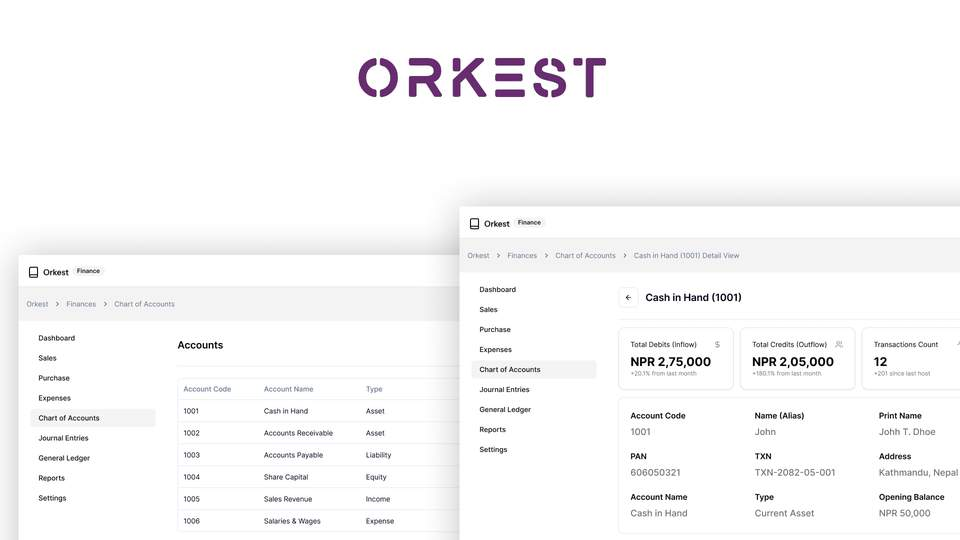
Hiring evidence
The useful evidence here is systems thinking: deciding what should stay consistent across modules, where density changes with the task, and where a shared pattern should intentionally stop being shared.
CRM, Sales, Inventory, Finance, and workspace areas use common structural rules without pretending their workflows are identical.
Actions and navigation are separated by scope so users can move between business areas without losing orientation.
Dense operational surfaces prioritize what must be readable at a glance, then move secondary detail behind deliberate inspection.
Reusable SaaS patterns are valuable only when the team also documents where the business task requires a different interaction.
Inspect a separate public repository showing how I think about tokens, components, audits, implementation contracts, and release workflow.
This evidence is separate from the Orkest client-project scope.
Inspect public repositoryOrkest evidence boundary: this case publicly shows architecture and interface work. No product-performance metric or public Orkest prototype is claimed where one is not available.
Orkest brings several business modules into one platform. Navigation, records, tables, permissions and actions need enough consistency to feel like one product, but CRM, inventory and finance do not represent the same task model. The design work began by deciding what should repeat and where intentional difference was more useful than visual uniformity.
My contribution. My scope covered UX architecture across the shared workspace and module structure: navigation levels, dashboards, tables, record views, information density, reusable patterns and the rules for when a module should depart from the shared grammar.
Navigation, record structure, table behavior and action hierarchy are shared where they reduce relearning.
A module can depart from the common pattern when the operational job genuinely needs different information or sequencing.
High-volume operational views favor scanning, while record and action states make priority and consequence clearer.
The architecture gives modules enough common language to feel related while protecting the differences that make each workflow useful. The result is a system engineering can extend without treating every new requirement as a one-off page.
Workspace navigation establishes location and scope.
Module dashboards prioritize the work unique to that domain.
Records and tables use shared interaction conventions.
Exceptions are documented instead of becoming accidental inconsistency.
The architecture gives modules enough common language to feel related while protecting the differences that make each workflow useful. The result is a system engineering can extend without treating every new requirement as a one-off page.